

Security Assurance Verification: The Continuous Evolution
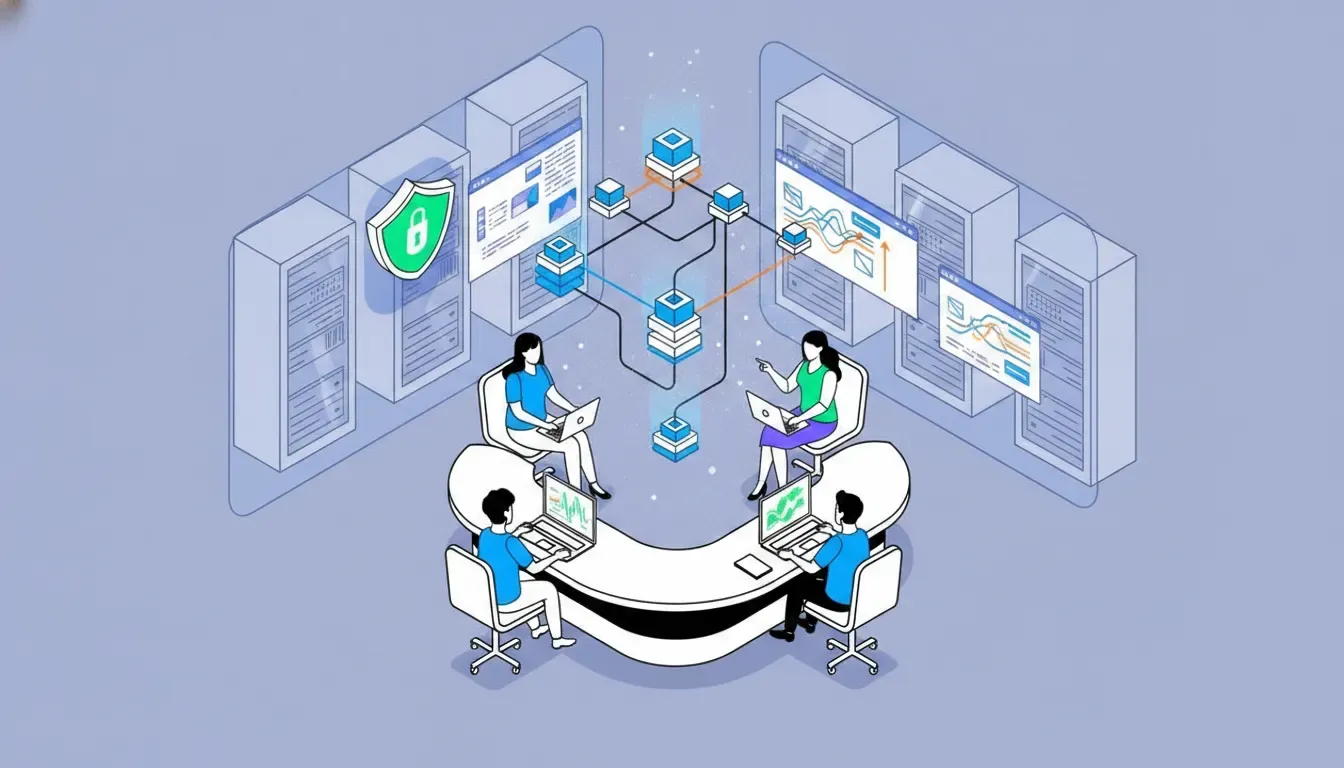
Security assurance verification is the continuous practice of proving that your systems, attack paths, and defensive controls work as intended as your environment changes. It goes beyond asking whether a scanner found a vulnerability or whether your organization completed an annual penetration test. It asks a harder operational question: can an attacker reach a meaningful outcome right now, and did the controls meant to stop that path actually stop it?
Ready to make security testing part of your operating rhythm? Explore Penti's AI-driven penetration testing with human validation.
The term is useful because modern security programs need both sides of the equation. They need the scale and speed to reassess a changing digital estate, and they need credible evidence that separates a theoretical weakness from an exploitable path. Security assurance verification, or SAV, brings discovery, adversarial testing, control validation, remediation, retesting, and reporting into one repeatable loop.
Why security assurance needs to evolve
Traditional penetration testing remains an important security activity. A skilled tester can reason about business logic, chain weaknesses, understand an application's purpose, and demonstrate real impact. The problem is not that an annual test is useless. The problem is treating a point-in-time assessment as a permanent statement about an environment that keeps changing.
Cloud resources are created and removed. APIs change. Identity permissions drift. New vendors connect to production. Developers ship fixes and features. Infrastructure teams update firewall rules, routing, and observability. Each change can alter an attack path or the effectiveness of a defensive control.
A report can be accurate on the day it is delivered and still become an incomplete description of risk later. That is why the next generation of assurance is not simply a more frequent annual pentest. It is an operating model that continuously reassesses what matters, validates what can be exploited, and confirms whether remediation worked.
What is security assurance verification?
Security assurance verification is an evidence-driven method for continuously validating the security of an evolving environment. It combines automated discovery and testing with risk-based human review, then closes the loop through remediation and retesting.
The word verification is deliberate. A vulnerability finding is a signal. Verification adds proof and context: the asset is reachable, the weakness is exploitable under the tested conditions, the attack path has a defined impact, and the relevant security control did or did not perform as expected.
SAV is a methodology and category frame, not a certification or a replacement for every required assessment. Organizations still need to meet the specific requirements of their customers, auditors, regulators, and risk policies. SAV helps them make security evidence current and useful between those formal checkpoints.
The six parts of the SAV loop
- Discover: maintain a current view of external assets, cloud resources, applications, APIs, identities, and relevant internal systems.
- Model: connect assets, trust boundaries, permissions, data, and defensive controls to understand plausible attack paths.
- Test: safely attempt relevant exploits and abuse cases instead of relying only on signatures or severity scores.
- Validate: confirm exploitability, impact, evidence quality, and the effectiveness of controls such as WAF, EDR, SIEM, and IAM.
- Remediate: route prioritized findings to the right owner with enough technical and business context to act.
- Retest and report: verify that a fix closed the risk, then preserve an evidence trail that security, engineering, executives, and auditors can understand.
The loop is continuous even when every activity is not running every minute. Mature programs use risk, change events, asset criticality, and evidence age to decide what to test, how deeply to test it, and when a human should review the result.
How is SAV different from a scanner, BAS, and a pentest?
These approaches can complement one another, but they answer different questions. Confusing them creates false confidence or unnecessary work.
| Approach | Primary question | Typical evidence | Important limitation |
|---|---|---|---|
| Vulnerability scanning | Does a known weakness or configuration issue appear to exist? | Asset, rule, CVE, configuration, or severity record | A signal does not always prove reachability, exploitability, or business impact. |
| Breach and attack simulation | Did a known technique reach or bypass a defensive control in a controlled simulation? | Technique result, control response, and telemetry | A simulated technique is not necessarily a complete exploit path to real data or impact. |
| Point-in-time penetration testing | Can a skilled tester exploit weaknesses and chain paths during a defined engagement? | Validated findings, proof of impact, methodology, and recommendations | The result describes the tested scope at a particular time. |
| Security assurance verification | As the environment changes, what can be exploited and are the intended controls still effective? | Current discovery, exploit evidence, control validation, remediation, retest, and trend history | It requires a disciplined workflow, safe authorization, and the right balance of automation and human judgment. |
A strong SAV program does not dismiss the other approaches. It assigns each one a clear job. Scanners provide breadth. Simulation tests defensive response. Human-led testing provides depth and creative reasoning. SAV connects the outputs, prioritizes the paths that matter, and verifies closure over time.
Why annual testing alone leaves an assurance gap
An annual test is a snapshot. Even a thorough snapshot cannot automatically account for every deployment, permission change, exposed service, or newly introduced integration that appears after the engagement ends.
Annual testing can also create an unhelpful organizational pattern. Teams prepare intensely for an assessment, fix a set of findings, archive the report, and gradually lose visibility into whether the same control is still working. When a customer or auditor asks for recent evidence months later, the team may have a valid report but little proof that the current environment resembles the tested one.
Continuous assurance changes the cadence of confidence. Instead of waiting for the next engagement to discover that a control drifted, the organization can use change events and risk signals to trigger focused validation. Instead of recording remediation as a ticket closure, it can retest the affected path and preserve evidence of the outcome.
Continuous does not mean constant
Continuous security assurance does not mean launching every possible exploit against every asset at all times. That would be noisy, expensive, and unsafe. It means maintaining a repeatable process that does not depend on one calendar date.
- Test internet-facing assets and high-value paths more frequently than low-risk systems.
- Trigger focused checks after meaningful application, identity, cloud, or network changes.
- Use automated discovery to detect new or altered assets before they become invisible scope gaps.
- Escalate complex business logic, chained attacks, and high-impact findings for expert review.
- Retest confirmed fixes rather than assuming that a ticket status proves risk closure.
The result is a risk-based rhythm. Some controls may be checked continuously through telemetry and automation. Some attack paths may receive scheduled adversarial testing. Others may require a human-led engagement. The defining feature is the closed feedback loop, not a promise that all testing runs without interruption.
How to build a security assurance verification program
SAV works best when it is designed as a program with ownership, authorization, scope, and evidence requirements. Buying a tool without defining those operating decisions usually creates another stream of findings instead of better assurance.
1. Establish authorization and safety boundaries
Document which assets may be tested, which test methods are approved, when testing may run, and who can stop an activity. Include production safeguards, rate limits, data-handling rules, credential handling, and emergency contacts. A test should never expand its scope merely because an exposed asset was discovered.
Define the difference between discovery, non-invasive validation, controlled exploitation, and deeper manual testing. Record customer or third-party authorization where it is required. The goal is to make useful testing repeatable without turning speed into uncontrolled activity.
2. Build an asset and attack surface baseline
Start with an inventory that connects domains, subdomains, applications, APIs, cloud resources, repositories, network ranges, identities, and data stores to business owners. Note whether each asset is internet-facing, authenticated, production, sensitive, or subject to a customer or regulatory commitment.
Asset management is not a one-time spreadsheet exercise. The baseline should show when an asset was first seen, what changed, who owns it, and whether it is covered by the appropriate testing method. This is where attack surface management supports the wider assurance loop: it keeps the scope connected to reality.
3. Prioritize by exposure and impact
Severity alone is not a sufficient prioritization model. A medium-severity weakness in an exposed, authenticated payment workflow may deserve attention before a higher-scored issue on an isolated development host.
Useful context includes exploitability, reachability, privileges required, data sensitivity, business criticality, control coverage, and whether the issue creates a path to another asset. Make those factors visible in the finding record so the person responsible for remediation can understand why the issue matters.
4. Test the paths that matter
Use the right depth for the risk. Automated agents can cover large numbers of assets and repeat known test patterns quickly. They can help find injection, authentication, authorization, configuration, exposed secret, and API weaknesses across a broad scope.
Higher-risk paths may require authenticated testing, role comparisons, cloud privilege analysis, multi-step chaining, or manual business logic review. A good program does not force every finding through the same workflow. It uses automation to expand coverage and human expertise where interpretation, creativity, or a nuanced safety decision is needed.
5. Validate controls, not only vulnerabilities
Security assurance is stronger when it tests the intended defense as well as the weakness. If a suspicious request reaches an application, did the WAF block it? If an account behaved abnormally, did the detection system create an actionable alert? If an identity was overprivileged, did IAM boundaries limit the blast radius? If a test reached a sensitive action, did logging preserve the evidence needed for response?
This does not mean every control can be certified by one test. It means the program records the relationship between attack attempt, control response, and outcome. A control that exists in a policy document but does not work under a relevant test condition should not be treated as effective merely because it is configured.
6. Route findings into remediation workflows
A validated finding should arrive with an owner, affected asset, reproducible evidence, business impact, recommended next step, and a suggested urgency. Integrations with issue tracking and development workflows can reduce handoff friction, but the ticket is not the end of the process.
Security and engineering leaders should be able to distinguish newly discovered risk, accepted risk, risk awaiting retest, and risk verified as closed. This vocabulary prevents a backlog from appearing healthier simply because tickets were moved between columns.
7. Retest and preserve the result
Retesting is the point at which assurance becomes measurable. After a fix, repeat the relevant validation and record whether the path is closed, partially mitigated, still exploitable, or no longer reproducible because the scope changed.
Keep the original finding, remediation action, retest method, date, result, and evidence together. That history helps teams identify recurring control failures and gives stakeholders a more credible view than a static count of open vulnerabilities.
What should continuous assurance verify?
The scope depends on the organization, but a practical SAV program usually covers several connected layers rather than treating each one as a separate silo.
- External attack surface: domains, subdomains, exposed services, cloud endpoints, certificates, and unexpected internet-facing assets.
- Web applications and APIs: authentication, authorization, session handling, injection, data exposure, rate limits, business logic, and API-specific abuse cases.
- Cloud and infrastructure: identity permissions, storage exposure, security groups, network paths, container and Kubernetes boundaries, and cross-account access.
- Internal networks: segmentation, privilege escalation, lateral movement, domain security, and access to sensitive systems.
- Software delivery: code and dependency changes, secrets, deployment workflows, and the security effect of a new release.
- Defensive controls: WAF, EDR, SIEM, IAM, logging, alerting, segmentation, and other controls that should prevent or reveal an attack path.
- AI-enabled applications: prompt injection, unsafe tool use, data leakage, excessive permissions, and the security of connected model APIs.
Coverage does not mean claiming that every possible weakness has been found. It means stating what was tested, which assumptions applied, which areas were out of scope, and what evidence supports the conclusion.
How AI and human expertise work together
AI can make security testing faster and more repeatable, but speed does not remove the need for security judgment. An automated result still needs scope awareness, exploitability analysis, safe execution, and useful remediation context.
An agentic testing system can map assets, adapt its testing to the environment, follow multi-step paths, and repeat checks as the surface changes. That is valuable for coverage and time to signal. Human experts add a different kind of value: they interpret business context, investigate unusual behavior, assess complex chains, challenge weak assumptions, and validate findings that need a higher standard of confidence.
Penti's approach combines agentic AI testing with certified security professionals who review findings and validate impact. The platform also supports manual penetration testing for scenarios that need deeper human-led analysis. This hybrid model is designed to avoid two common extremes: a slow process that cannot keep up with change, and a fast stream of unverified alerts that security teams cannot trust.
The same principle applies to reporting. AI can organize evidence and identify trends. A security professional should still be accountable for explaining what was tested, what the result means, and where uncertainty remains.
Want a current view of your changing exposure? See how Penti combines continuous scanning, prioritization, and remediation guidance.
How SAV supports compliance without becoming a checklist
Compliance frameworks often require documented security activities, defined testing methods, evidence of remediation, or testing after meaningful changes. The exact requirement depends on the framework, scope, assessor, and organization. A continuous assurance program can make that evidence more current and easier to retrieve, but it should not claim that one platform automatically satisfies every obligation.
For example, the NIST Technical Guide to Information Security Testing and Assessment provides a foundation for planning and conducting technical security tests. The OWASP Application Security Verification Standard gives teams a structured way to think about application security requirements and verification. The PCI Security Standards Council's PCI DSS v4.0.1 publication is the authoritative source for the current standard and should be read with applicable testing guidance.
These references do not turn SAV into a compliance shortcut. They help teams map the right tests and evidence to the obligations that apply to them. A mature program keeps framework mappings explicit, records limitations, and asks an auditor or qualified assessor when a requirement is ambiguous.
Examples of useful assurance evidence
- Scope and authorization record, including assets, accounts, test windows, and exclusions.
- Asset discovery history showing what changed and when it entered the tested scope.
- Methodology and test coverage mapped to the relevant application, cloud, network, or control objective.
- Reproducible proof of exploitability and impact, handled according to data and production safety rules.
- Human review notes for findings that require expert validation or business logic analysis.
- Remediation ownership, dates, risk decisions, and evidence of compensating controls where applicable.
- Retest results showing whether the original path was closed and whether a related path remains.
- Time-stamped reports that explain evidence age and the changes since the prior assessment.
How SAV maturity grows over time
Not every organization starts with a fully automated, cross-environment assurance program. A useful maturity model gives teams a way to improve without waiting for perfect inventory, integrations, or staffing.
Stage one: documented and repeatable
At the first stage, the organization has an approved scope, a named owner, a testing method, and a consistent way to record findings. The team knows which assets are most important and can explain when the last meaningful test occurred. The main improvement is moving from ad hoc testing to a process that can be repeated and reviewed.
Stage two: connected to change
Next, assurance becomes responsive to the delivery cycle. New domains, cloud resources, releases, API changes, and identity changes can trigger discovery or focused validation. Findings move into the same systems used by engineering and security operations. The team can see whether a change created a new path or weakened an existing control.
Stage three: risk-based and evidence-driven
At a more mature stage, cadence and depth reflect exposure and impact. High-value paths receive deeper validation. Low-risk assets receive proportionate coverage. Human experts review findings where business logic or attack chaining matters. Retests produce a reliable history of verified closure, and reports show evidence age instead of implying that an old snapshot is current.
Stage four: measured security effectiveness
The most mature programs use assurance results to measure whether defenses work across time. They track recurring control failures, time to verified closure, critical path exposure, and coverage freshness. Leaders can ask not only how many findings exist, but which controls repeatedly fail, which assets remain outside scope, and whether remediation reduces real attack paths.
Maturity is not a reason to delay action. A small team can begin with a narrow, authorized scope and a clear retest process, then expand as its inventory and workflows improve. The important step is to preserve the loop from evidence to action to verification.
Which metrics show that assurance is improving?
Counting findings can be useful, but volume alone does not show whether a security program is effective. Consider a balanced set of operational and outcome metrics:
- Time to validated finding: how quickly a meaningful, reproducible risk reaches the responsible team.
- Coverage freshness: how much of the known attack surface has been assessed within the organization's evidence window.
- Remediation verification rate: the share of fixes that receive a retest instead of being closed by ticket status alone.
- Time to verified closure: the elapsed time from validated finding to evidence that the path no longer works.
- Recurring control failure: how often the same defensive control fails after a prior remediation.
- Critical path exposure: the number and age of exploitable routes to sensitive assets.
- Evidence readiness: the time required to assemble current scope, methodology, findings, and retest records for a customer or assessor.
Use trends rather than isolated numbers. A rise in findings can mean better discovery. A lower finding count can mean reduced exposure, reduced testing, or an incomplete scope. The metric should always be interpreted with coverage, evidence quality, and environment change in view.
How to choose a security assurance verification platform
When evaluating tools or services, security leaders should ask questions that expose the operating model behind the product.
- What can it discover? Confirm how the platform finds external, cloud, application, API, internal, and identity-related assets, and how it handles changes.
- What does it actually test? Separate vulnerability detection, exploit validation, control testing, and human-led assessment. Ask for examples of each.
- How are unsafe actions controlled? Look for scope boundaries, authorization controls, rate limits, credentials handling, test windows, and a clear stop process.
- How are findings verified? Ask how the platform handles false positives, chained findings, business logic, proof of impact, and expert review.
- What happens after remediation? Check whether retesting is built into the workflow and whether results preserve an auditable history.
- Can the evidence fit the audience? Security engineers, developers, executives, customers, and auditors need different levels of detail from the same underlying result.
- Does it fit the existing workflow? Review integrations with issue tracking, source control, compliance systems, communication tools, and APIs.
- What remains outside the platform? A credible provider should explain limitations and identify when a focused manual engagement, architecture review, or assessor conversation is still needed.
Be cautious of any claim that continuous testing makes annual assessments, human testers, or compliance expertise unnecessary. The strongest programs are explicit about which question each method answers and where human judgment remains essential.
SAV also does not prove that an organization is secure in an absolute sense. Testing is performed within an authorized scope, under defined assumptions, and against the techniques selected for that environment. A clean result means that the tested paths and controls behaved as observed. It does not eliminate unknown vulnerabilities, risks in excluded assets, weaknesses introduced after the evidence window, or threats that use a different path.
This distinction makes the output more credible, not less. Security leaders can state what was verified, when it was verified, how it was tested, and what remains uncertain. They can then decide whether the next investment should be broader discovery, deeper application testing, control validation, architecture work, or a focused manual engagement. Assurance is a disciplined way to reduce uncertainty, not a promise to remove it.
What Penti's SAV approach looks like in practice
Penti frames penetration testing as a security assurance and validation layer for engineering, security, and compliance teams. Its agentic AI testing supports discovery, attack-surface mapping, multi-step testing, and continuous reassessment across web applications, APIs, cloud environments, and infrastructure. Findings are prioritized with remediation guidance, and certified security professionals can validate critical results.
The platform is designed for teams that need current evidence without taking engineers away from the product roadmap for every testing cycle. It supports integrations such as GitHub, Jira, Slack, and Vanta, allowing security results to move into development and compliance workflows rather than remaining in a detached report.
That operating model is illustrated by Penti's Disco case study. Disco used Penti for on-demand, validated security evidence and reported closing enterprise deals four times faster, reducing open vulnerabilities by 60 percent in the first year, and receiving initial findings on day one. Those are customer-specific results, not a universal promise, but they demonstrate the business value of reducing the gap between security work, remediation, and sales evidence.
Organizations can also combine automated coverage with manual testing when a scope calls for deeper human analysis. The practical objective is not to replace one type of assessment with a slogan. It is to create a more current, connected, and testable view of security effectiveness.
Questions security leaders ask about continuous assurance
Does security assurance verification replace an annual penetration test?
Not automatically. Annual testing may remain appropriate or required for a specific framework, customer contract, risk policy, or assessment scope. SAV complements that work by keeping the environment under review between formal engagements and by verifying important remediation and control changes.
Is security assurance verification the same as continuous vulnerability scanning?
No. Scanning can identify possible weaknesses at scale, while assurance verification adds exploitability, control effectiveness, impact, remediation, retesting, and evidence context. Scanning may be one input into a SAV program, but it is not the complete method.
Does continuous testing mean testing every asset every day?
No. Continuous means the process is ongoing and responsive to change, not that every test runs at maximum depth all the time. Use risk, exposure, asset criticality, change events, and evidence age to select the right cadence and testing depth.
Where do human penetration testers fit?
Human testers add judgment for complex business logic, unusual attack paths, chained exploitation, safety decisions, and findings that need credible validation. Automation expands coverage and speed; human expertise improves interpretation and confidence where the risk warrants it.
What is the first step toward SAV?
Define an authorized scope, build a current asset baseline, identify the paths and controls that matter most, and decide what evidence will prove that a risk is closed. Then establish a repeatable discover, test, validate, remediate, and retest workflow with clear owners.
The practical meaning of continuous security assurance
Security assurance verification turns security testing from an isolated event into a feedback system. It recognizes that a report is only one point in time, that a vulnerability signal is not the same as an exploitable path, and that a closed ticket is not the same as verified remediation.
The best programs combine breadth with depth, automation with human judgment, and technical findings with business context. They keep scope current, validate the controls intended to reduce risk, retest meaningful fixes, and preserve evidence that remains understandable months later.
For organizations shipping quickly, managing sensitive data, or answering demanding enterprise security reviews, that continuity matters. The goal is not to create more security activity. It is to produce more trustworthy proof that the environment is being tested, defended, improved, and verified as it evolves.
Learn how Penti approaches agentic AI penetration testing with human validation.
