-White.avif)
-Color.avif)
Internal network penetration testing by Penti
Penti’s internal network pentesting deploys AI-powered agents overseen by human cybersecurity experts in order to uncover flaws, misconfigurations, and privilege escalation vulnerabilities that can result in a full compromise of your network.


AI-driven internal network penetration testing services
Internal penetration testing is a core part of a holistic cybersecurity strategy. Internal penetration testing simulates what a breach from within your systems can look like by imitating the actions of hackers or malicious insiders who have already accessed an organization’s internal network.
Penti’s internal network pentests will validate your organization’s security defenses against this dangerous and common attack scenario.
Continuous visibility of your internal attack surface
Penti’s agentic technology offers real-time visibility of your network’s infrastructure.
In-depth security assessments
.avif)
Intuitive and accessible pentests
.avif)
Penti’s dashboard displays security test results, risk prioritization, and step-by-step remediation guidance for identified insider threats and security vulnerabilities within your network.
Compliance support and documentation
.avif)
Headache-free scoping
AI-powered threat intelligence gathering
Expert-guided pentesting
Thorough reporting and remediation
How Penti’s internal penetration testing works
Sample Internal Network Penetration Testing Report
The most damaging attacks happen after the attacker is already inside. Penti's internal network report documents exactly how far lateral movement, credential attacks, and Active Directory exploitation can go — tested under real assumed breach conditions.
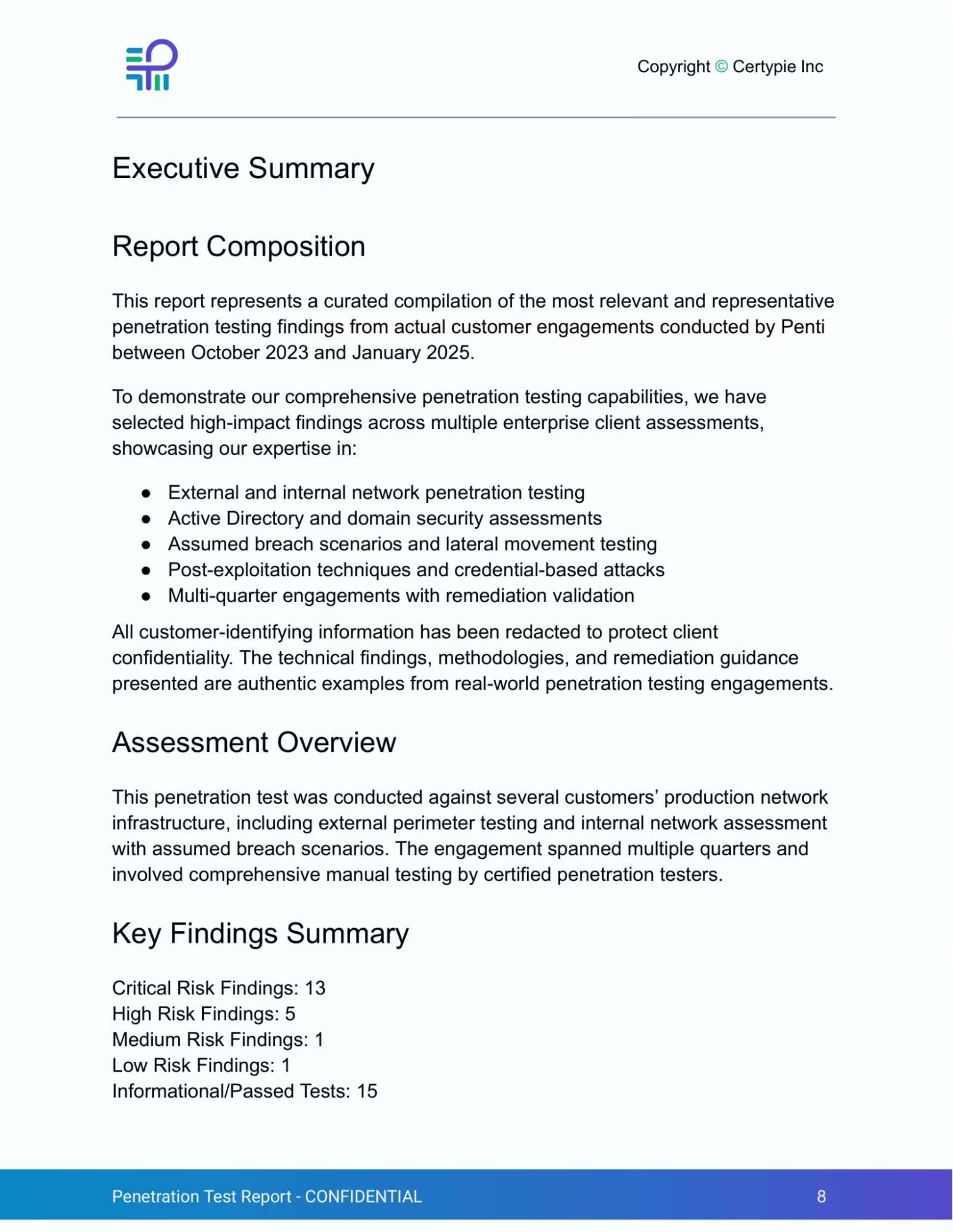
Executive Summary
Opens with the internal assessment scope — what was tested under assumed breach conditions: corporate VLANs, Active Directory infrastructure, production servers and workstations, and internal applications. The Key Findings Summary table shows total findings by severity. The Most Significant Findings section highlights the most critical internal attack paths discovered — Active Directory domain compromise vectors, credential extraction techniques, and lateral movement capabilities — each with a one-sentence impact description. Followed by an Impact Assessment showing the full attack chain from initial internal access to complete domain compromise, and a Recommendations Priority timeline.
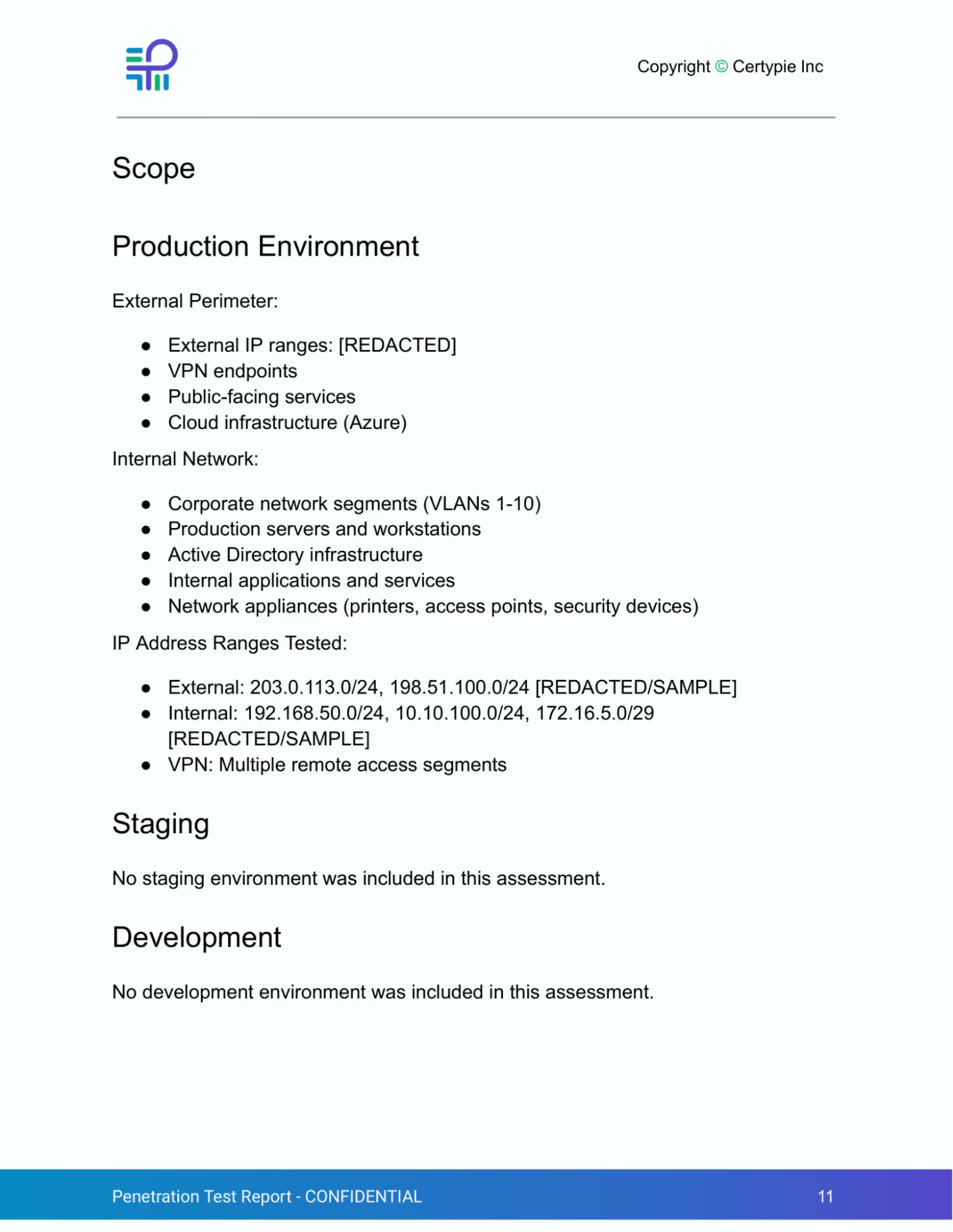
Scope & Our Tools
Internal scope covers corporate VLANs, production servers and workstations, Active Directory domain controllers and infrastructure, internal applications, and network appliances — with dedicated assumed breach testing windows running in controlled after-hours conditions. Active Directory attack tools: Bloodhound (attack path analysis), Impacket Suite (SMB and credential attacks), Mimikatz (credential extraction), Responder (LLMNR/NBT-NS poisoning), Rubeus (Kerberos attacks), CrackMapExec (lateral movement). Post-exploitation frameworks: PowerShell Empire, Metasploit, Covenant.

Manual Assessment Results
A summary table of all findings confirmed under assumed breach conditions — finding title, status (Active, Remediated, or Validated), and risk level per row. Covers Active Directory privilege escalation paths, credential extraction techniques (memory, DPAPI, relay attacks), network protocol weaknesses enabling lateral movement, and lateral movement capability validation. Each high-priority finding includes a detailed card with affected systems, MITRE ATT&CK technique referenced, PowerShell commands used, and remediation steps.

Prioritized Remediation
Tier 1 (24–48 hours) closes the most critical Active Directory attack paths — restricting replication permissions, enforcing protocol signing on domain controllers, and enabling attack detection via audit policy. Tier 2 (1–2 weeks) covers credential protection controls: Credential Guard deployment, enterprise password management, and privileged account hardening. Tier 3 (1–3 months) addresses AD architecture: tiering model (Tier 0/1/2), Privileged Access Workstations, and Microsoft Defender for Identity. Each item includes the specific PowerShell command or Group Policy setting required.

Re-testing
Internal retests re-run the complete attack chain against the hardened environment — re-attempting each privilege escalation path, credential relay, and lateral movement technique — to confirm each control blocks the original exploit. Each bypass attempt and its outcome is documented with updated finding status. Retest timeline: Tier 1 within 1 week, Tier 2 within 2 weeks, Tier 3 within 1 month.
More penetration testing services by Penti
No matter your cybersecurity or compliance needs, Penti’s smarter pentesting covers them all.

OWASP Top 10 Pentesting

Cloud pentesting

Network pentesting

External network pentesting

Mobile pentesting
.svg)
Web app pentesting

Penetration testing for IoT
More compliance-driven pentests by Penti

Industries we work with


Scan smarter with Penti
Our internal network pentest service is grounded in industry best practices and designed to uncover real-world threats without disrupting business operations.
.svg)
Human-led pentests with agentic efficiency
.svg)
Continuous internal pentests

Compliance framework mapping
.svg)
Protection across complex environments
What our clients say
For security leaders turning to AI to stay ahead of threats and minimize costs, Penti provides the ideal solution.


Penti's service is a game changer for our compliance needs. The insights we gained were invaluable for our team. Doing this well is crucial for our compliance targets and key in advancing our strategic initiatives.


The integration between Penti, our system, and third parties like Vanta is exceptional. I would also like to mention that their response times are extremely fast!

Penti has been like having an experienced and nimble Security Engineer on staff. They have outlined issues in our platform and guided us towards implementations and fixes that allow for us to ensure we are treating our users data with the utmost care.
What sets Penti apart
Penti offers a unique blend of expert-led testing and real-time threat intelligence powered by agentic AI, delivering thorough internal penetration testing at a fraction of the cost.
A hybrid approach to pentesting

Penti’s senior security engineers lead every engagement, combining adversarial thinking with agentic AI analysis. Penti uncovers privilege-escalation paths and lateral movement opportunities that standalone scanners consistently miss.
Real-time threat intelligence in every test
Penti continuously updates its attack methodologies using live threat intelligence feeds and emerging TTPs. That means your internal network is tested against the same techniques used by today’s most active threat actors.
Faster testing, cleaner reporting, zero noise
Our AI-assisted workflows automate the repetitive parts of pentesting, like enumeration, correlation, and evidence collection so that engineers can focus on deep exploitation. This means faster assessments, consolidated findings, and reports that your IT and security teams can act on immediately.
Enterprise-grade testing at a fraction of the cost
By blending expert oversight with intelligent automation, Penti delivers the depth of a traditional consulting engagement without its price tag. Your organization gets premium internal network pentesting that is thorough, repeatable, and affordable.
.avif)









FAQ
How is Penti different from traditional penetration testing services?
Penti isn’t your typical internal network penetration testing company. We employ a hybrid model: supervised agentic AI for rapid discovery and correlation, paired with expert human pentesters who perform deep exploitation. This combination uncovers vulnerabilities that automated scanners miss.
Will Penti’s internal penetration testing disrupt our operations?
No. Penti’s testing is designed to be safe, controlled, and non-disruptive. Our agents and human engineers mimic the behavior of a malicious insider without overloading systems or interrupting production workflows.
Will Penti’s internal penetration testing disrupt our operations?
No. Penti’s testing is designed to be safe, controlled, and non-disruptive. Our agents and human engineers mimic the behavior of a malicious insider without overloading systems or interrupting production workflows.
How does Penti use AI in internal network pentesting?
Penti’s agentic AI automates reconnaissance, enumeration, and data correlation, allowing rapid mapping of your internal environment. AI agents continuously gather intelligence, identify anomalies, and highlight potential attack paths, while human security engineers validate findings, attempt exploitation, and ensure accuracy.
Can Penti’s internal pentesting help with compliance requirements?
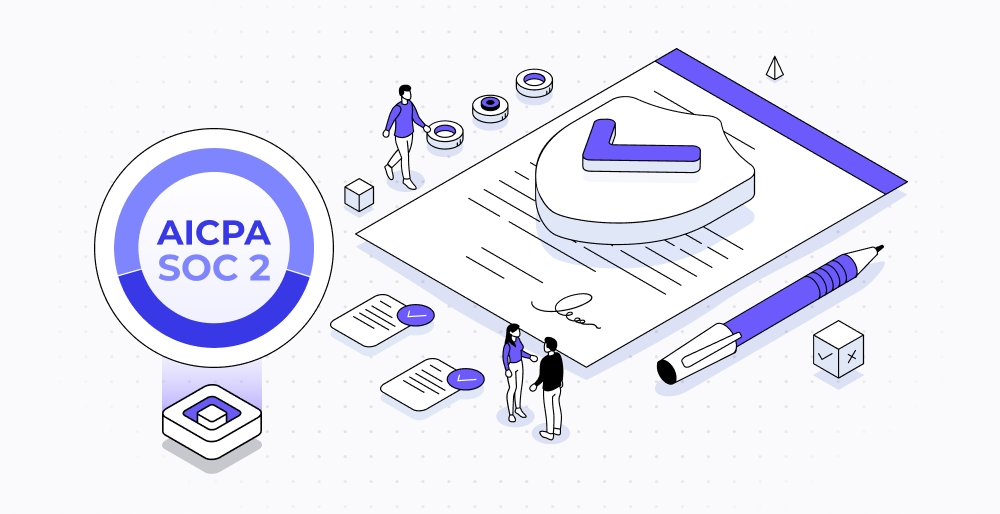
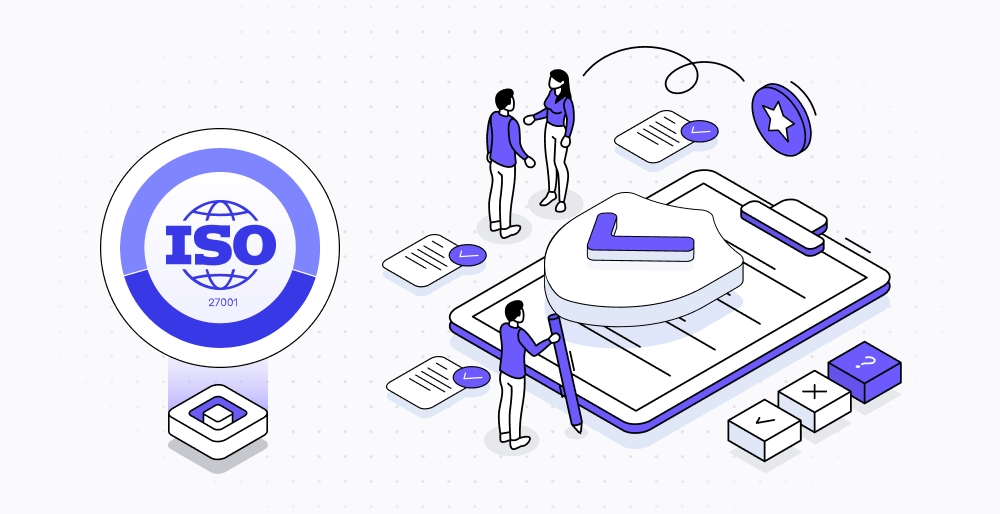
Yes. Penti provides audit-ready documentation aligned with frameworks such as SOC 2, ISO 27001, NIST 800-53/NIST CSF, HIPAA, and PCI DSS. Our reports include control mappings, remediation guidance, and evidence summaries, which makes it easier for compliance teams to prepare for audits or meet customer security requirements.