-White.avif)
-Color.avif)
AI-Driven Web Application Penetration Testing Software
Penti's AI-driven web application penetration testing software uncovers vulnerabilities in your web applications and APIs, strengthens security posture, and protects sensitive data. Agentic AI scanning backed by certified penetration testers. Need a one-shot pentest? Click below to start now.


We publish how leading AI models score as pentesters on OWASP Juice Shop, 98 official challenges, open methodology.
See the AI pentest benchmark ↗Smarter web application security penetration testing with Penti
Penti's web app penetration testing tool combines AI-led efficiency with expert-led penetration testing to find security vulnerabilities across your web applications. AI-driven tests simulate real-world attacks that could gain access to your systems and provide remediation guidance to prevent breaches before they occur.
By identifying vulnerabilities in web application infrastructure including DNS servers, web servers, and API endpoints, Penti pinpoints where attackers can gain access to sensitive data if exposures are left unresolved. Regular web application pentesting and vulnerability scanning are key parts of a security strategy that supports your DevSecOps workflow and reduces attack surface.
Protect, comply and grow with our web application penetration testing
Web applications are top targets for brute force attacks, credential stuffing, and exploitation of business logic flaws. Consistent web app penetration testing catches these security issues before attackers do, protects sensitive data, and strengthens your security posture against sophisticated attacks.
Prevent costly breaches before they happen

Accelerate compliance and close more business
Demonstrate mature security to partners
Realistic vulnerability identification
Contextual risk prioritization
Compliance and audit support
Detection and resilience improvement
Increased stakeholder confidence
How we pentest web applications
Penti delivers comprehensive web application penetration testing powered by AI-driven scanning and expert validation by certified penetration testers, turning vulnerability discovery into actionable security insights.
Sample API Penetration Testing Reports
Penti runs many pentest engagement types. Below are two common formats for Web Application & API testing that both cover full API surfaces: a manual pentest by certified penetration testers, and an Agentic AI-assisted pentest with continuous re-testing. Each ends with a structured report your dev team can act on the same day.

Manual Web Application & API Penetration Testing Report
An Agentic AI-assisted pentest covering the full Web Application and API surface, with certified experts reviewing every finding.
Inside the report:
- Scope & Methodology: the Web Application and API endpoints under test, aligned with OWASP Top 10 2021, ASVS, NIST CSF, and SOC 2 Trust Services Criteria.
- Testing Cadence: the continuous testing model. Agentic AI runs on a scheduled cadence while supplementary scanners layer in quarterly, keeping coverage seamless.
- Scanner Factors & Risk Rating: every finding gets an OWASP Likelihood × Impact score along with a Confidence rating (Certain/Firm/Tentative), so high-signal findings stand out from ones that need deeper review.
- Findings Table: a side-by-side view mapping each vulnerability to the scanner that caught it (IDOR and Reflected XSS from the Agentic AI engine, Content Security Policy issues from Burpsuite, and more), across all scanner sources.
- Prioritized Remediation: remediation grouped by tier: Tier 1 (24-48 hours), Tier 2 (1-2 weeks), and Tier 3 (1-3 months). Findings within each tier come with business impact and specific recommended actions.
- Re-testing: a retest schedule (Tier 1 within 1 week, Tier 2 within 2 weeks, Tier 3 within 1 month) alongside continuous re-testing on the Agentic AI engine.
- Disclosure & Certifications: the legal engagement scope alongside tester credentials, including OSCP, CPTS, CEH, and cloud security certifications.
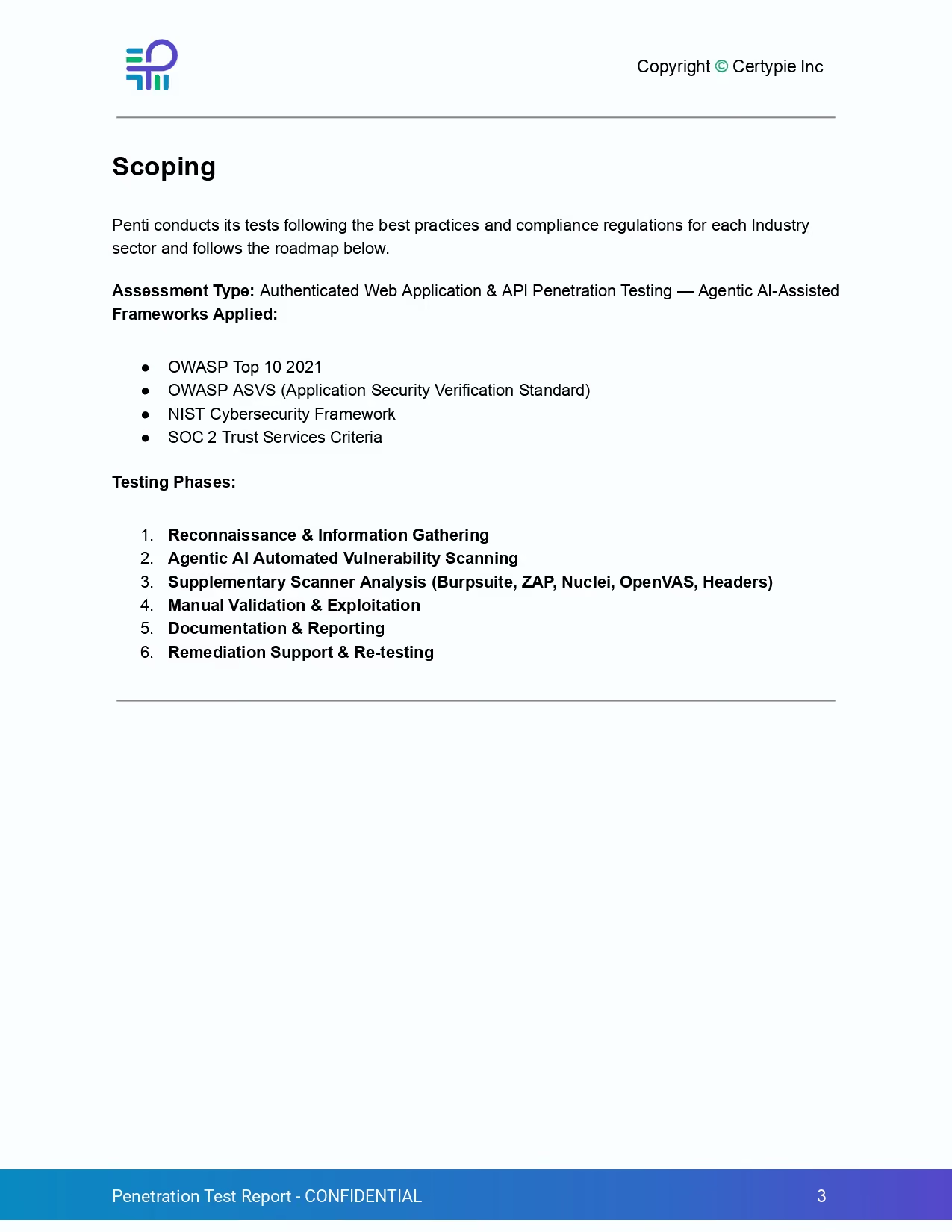
Agentic AI Web Application & API Penetration Testing Report
A manual pentest by certified testers covering external-facing apps, authenticated portals, admin interfaces, and RESTful, GraphQL, and SOAP APIs.
Inside the report:
- Scope & Methodology: the web apps and APIs under test, mapped to OWASP Top 10 2021, ASVS, OWASP API Security Top 10, PCI DSS, and NIST SP 800-95.
- Testing Phases: the 8-step systematic approach. Dedicated Input Validation & Injection Testing, Business Logic Testing, and Authorization & Access Control Testing means nothing gets skipped.
- Manual Assessment Results: every vulnerability gets its own page (SSTI, SQL Injection, IDOR, XSS, SSRF, XXE Injection, Unrestricted File Upload, Authentication Bypass, and more). Each entry walks through what the vulnerability is, how attackers exploit it (with reproduction steps and payloads), how to remediate it (BAD vs GOOD code snippets), and which compliance controls it breaches.
- Prioritized Remediation: remediation grouped by tier: Tier 1 (24-48 hours) and Tier 2 (1-2 weeks). Findings within each tier come with business impact, technical effort, and specific recommended actions.
- Re-testing: a retest schedule (Tier 1 within 1 week, Tier 2 within 2 weeks) plus a Successful Retests table showing retest date and verified status.
- Disclosure & Certifications: the legal engagement scope plus tester credentials, including OSCP, BSCP, CEH, and cloud/API security certifications.
What Penti tests for in your web app
Penti's web application penetration testing covers the OWASP Top 10 and goes beyond, from classic injection attacks to nuanced authentication, session management, and business logic flaws. Below are the vulnerability classes Penti has confirmed across real customer engagements.
Server-Side Template Injection (SSTI)
SQL Injection
.avif)
Rate Limiting Bypass

Source Code Disclosure
.avif)
Insecure Direct Object Reference (IDOR)
.avif)
Server-Side Request Forgery (SSRF)
Cross-Site Scripting (XSS)
Authentication Bypass
XML External Entity (XXE) Injection
.avif)
Unrestricted File Upload
Business Logic Flaws

API Security Issues
Web app pen tests
done by Penti
Penti’s AI-powered platform offers a full suite of security testing tools that make our web application pen testing services more precise, scalable, and targeted.

API pentesting

Cloud pentesting

Network pentesting

External network pentesting

Internal network pentesting

Mobile pentesting
.svg)
Web app pentesting

Penetration testing for IoT
Compliance-driven web app pentesting
Use Penti to prove that your web app complies with security frameworks and regulations in your industry.

Other Industries we work with


Get a clear picture of your web application security performance
Don't leave your web application security to guesswork. Use Penti's web application penetration testing software to gain full transparency, find vulnerabilities, and strengthen your security posture, all from one platform.

All-in-one security dashboard
.svg)
Customizable pentesting solutions

Security incident and breach prevention

Audit and compliance-friendly reports
What our clients say
For security leaders turning to AI to stay ahead of threats and minimize costs, Penti provides the ideal solution.


Penti's service is a game changer for our compliance needs. The insights we gained were invaluable for our team. Doing this well is crucial for our compliance targets and key in advancing our strategic initiatives.


The integration between Penti, our system, and third parties like Vanta is exceptional. I would also like to mention that their response times are extremely fast!

Penti has been like having an experienced and nimble Security Engineer on staff. They have outlined issues in our platform and guided us towards implementations and fixes that allow for us to ensure we are treating our users data with the utmost care.
Why test your web app with Penti
Penti isn't just a web app penetration test provider. It's a complete penetration testing platform designed to find security vulnerabilities and protect sensitive data. We combine deep technical expertise from certified penetration testers with an accessible AI-driven platform.
Expert-led agentic AI pentesting

Penti combines artificial intelligence with the knowledge of our web app security experts to deliver comprehensive end-to-end web application penetration testing, with certified human review at every stage.
Actionable results
Every Penti report comes with prioritized remediation, code snippets for fixes (BAD vs GOOD examples), and reproduction steps. Compliance mappings to SOC 2, ISO 27001, PCI DSS, HIPAA, GDPR, and NIST are built in, so your security teams can act on findings the same day.
Compliance-ready reporting
When your product is still in development, security is essential. Penti's web application penetration testing software helps you identify and resolve critical vulnerabilities early before they become costly reworks or last-minute blockers. By integrating security testing into your development cycle, you reduce risk and show enterprise customers you take security seriously from day one.
Hands-on security partners
From scoping to remediation re-testing, Penti's certified penetration testers work alongside your team. You get an accessible, expert-led service plus access to the same dashboard where findings live, not just a static PDF dropped on your team after weeks of waiting.










FAQ
How are web application penetration tests performed?
Penti's penetration testing simulates real-world attacks on your application to find vulnerabilities and exploit them safely before attackers can. Our certified penetration testers combine AI-powered reconnaissance with agentic AI testing to assess authentication, access controls, input validation, session management, business logic, and API endpoints. Each test is tailored to your web app's architecture and threat model.
What is the difference between web application testing and vulnerability scanning?
Vulnerability scanning is automated and identifies known issues based on signatures or rules. Useful but it can produce false positives and miss logic flaws. Web application penetration testing involves certified human experts actively probing your web app to uncover complex security vulnerabilities, assess their exploitability, and document business impact with reproduction steps.
Is automated penetration testing better for web apps than manual testing?
No. Automated testing helps with breadth and speed; manual testing provides depth. Only manual testing by certified penetration testers can find nuanced vulnerabilities like broken access controls, IDORs, or chained exploits. Penti combines AI-driven pentesting with manual testing to deliver high-coverage, high-accuracy results.
What is OWASP Top 10?
The OWASP Top 10 is an industry-standard list of the most critical web application security risks, including injection attacks, broken authentication, and insecure design. Penti’s testing methodology aligns with this framework and goes beyond it to cover emerging threats.
How does Penti prioritize web application vulnerabilities?
Each finding is analyzed and scored using the OWASP Risk Rating methodology (Likelihood × Impact). Scanner findings also carry a Confidence rating (Certain, Firm, or Tentative). The Prioritized Remediation section organizes fixes into Tier 1 (24-48 hours), Tier 2 (1-2 weeks), and where applicable Tier 3 (1-3 months) with business impact, technical effort, and recommended actions.
What is web application penetration testing?
Web application penetration testing is a security assessment in which certified penetration testers (or AI agents backed by human review) simulate real-world attacks against a web application and its APIs to find vulnerabilities like SQL injection, IDOR, SSRF, XSS, broken access controls, authentication bypass, and business logic flaws. The methodology typically aligns with OWASP Top 10, OWASP ASVS, and OWASP API Security Top 10.
When should I use Manual Web App Pentest vs Agentic AI Web App Pentest?
Manual is best for audit-grade deliverables tied to a specific compliance window (SOC 2 Type II, PCI DSS, ISO 27001 attestation) or when you need maximum depth on a specific scope. Agentic AI is best for continuous monitoring across many endpoints, scheduled re-testing after each release, or when you want both AI-driven scanning and human-validated findings consolidated into one report. Both deliver the same Penti report format.
How long does a web app pentest take?
Same day onboarding to first results: Penti's Agentic AI starts running within minutes once your scope is configured. Manual pentests scale with scope; a typical Web Application & API engagement covers external-facing apps, authenticated portals, admin interfaces, and APIs across the full tech stack. Re-tests happen on a scheduled cadence: Tier 1 within 1 week of remediation, Tier 2 within 2 weeks.
Authenticated vs anonymous testing: what's the difference?
Anonymous (unauthenticated) testing simulates an external attacker with no credentials, finding security issues exposed to the public internet. Authenticated testing uses valid credentials to access deeper application logic, internal APIs, and role-specific features. Penti's Agentic AI engagement is Authenticated Web Application & API Penetration Testing by default, since most modern vulnerabilities live behind auth (IDORs, business logic flaws, API authorization issues, broken access controls).